Recollection 1
Tracing the Archive, Re-tracing the Story.
Residency at the British Museum, supported by SDCELAR, London, UK
2025
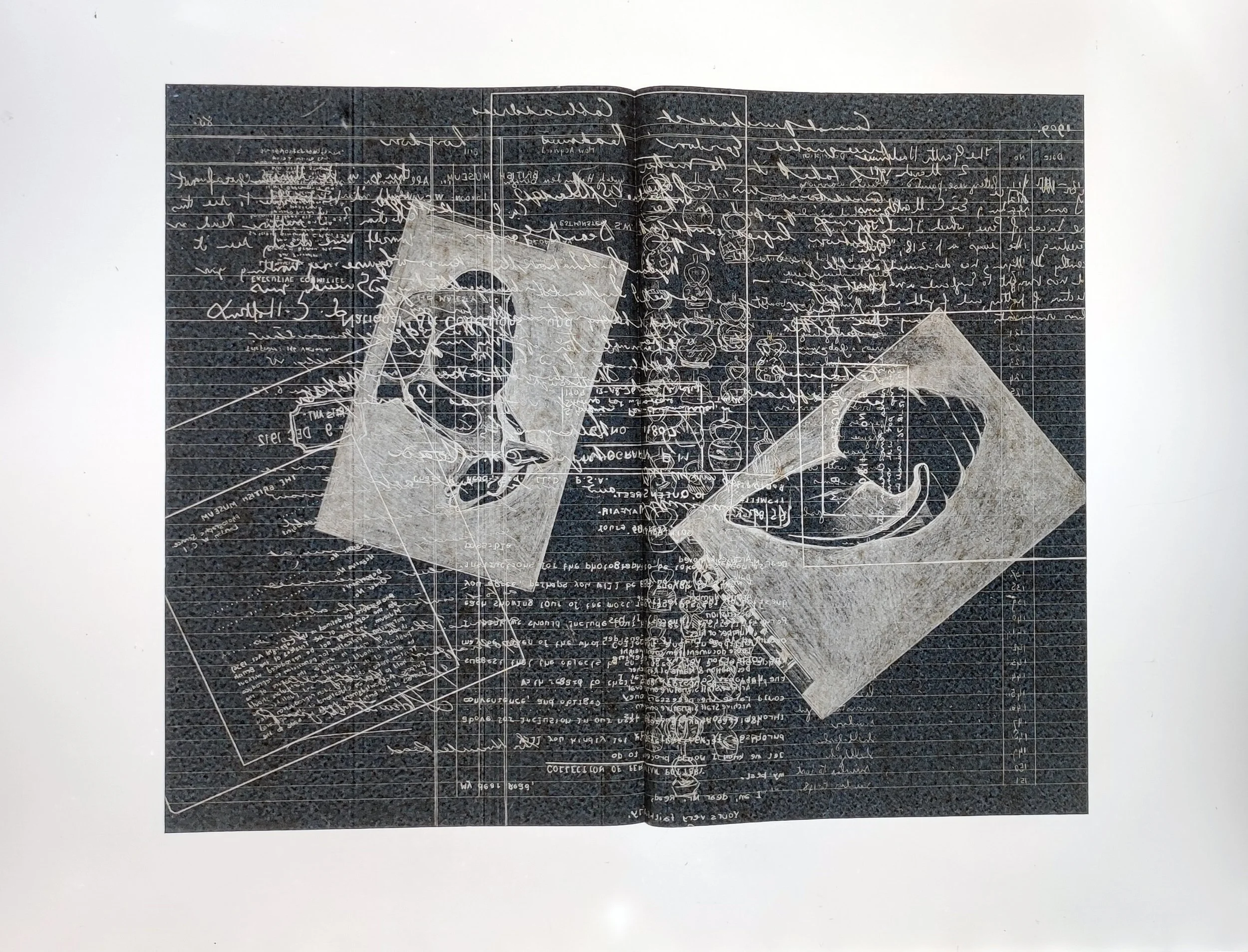
Tracing the Archive, 1/7, 2025. Carbon copy paper , 32 x 41 cm
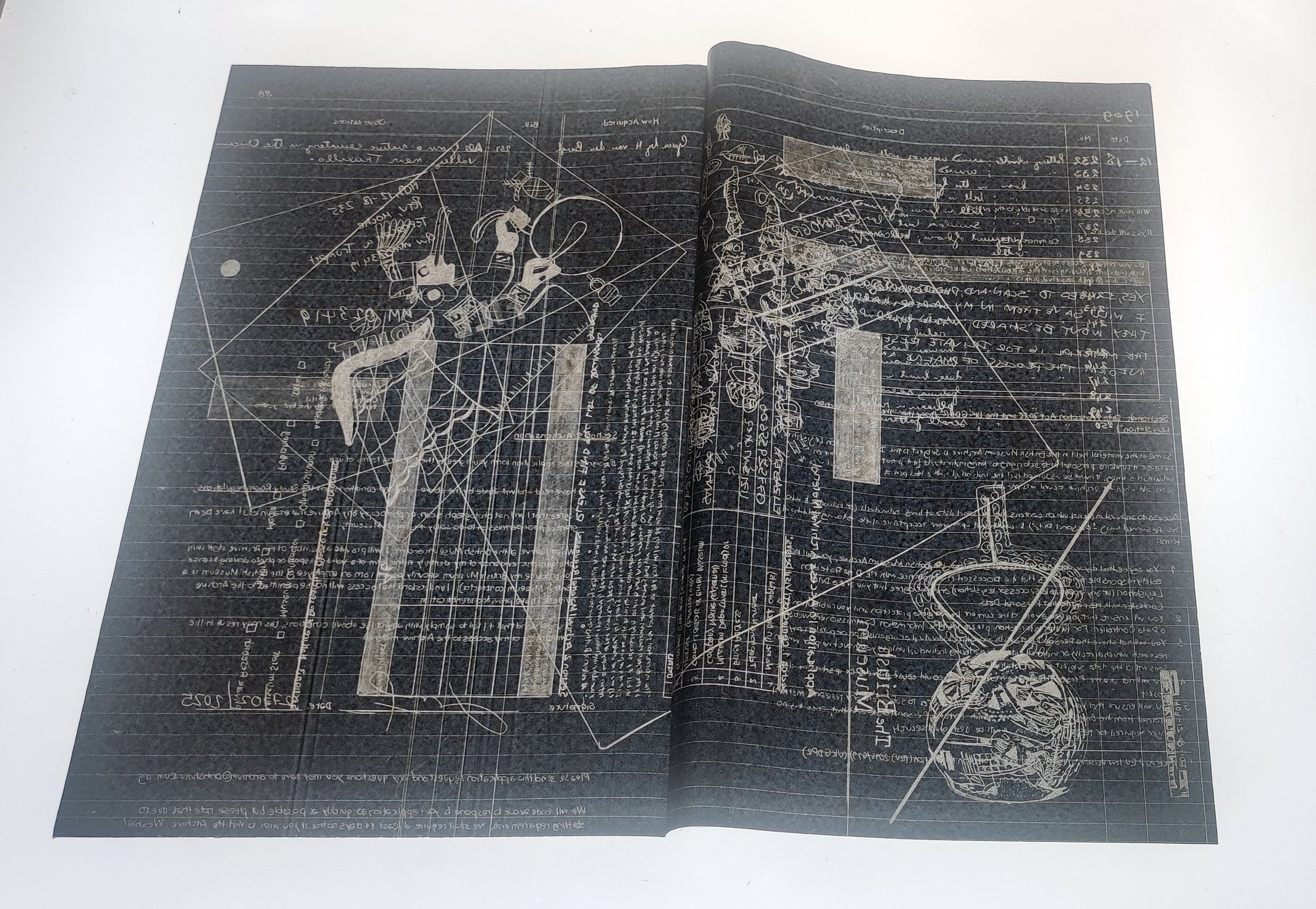
Tracing the Archive, 2/7, 2025. Carbon copy paper , 32 x 41 cm
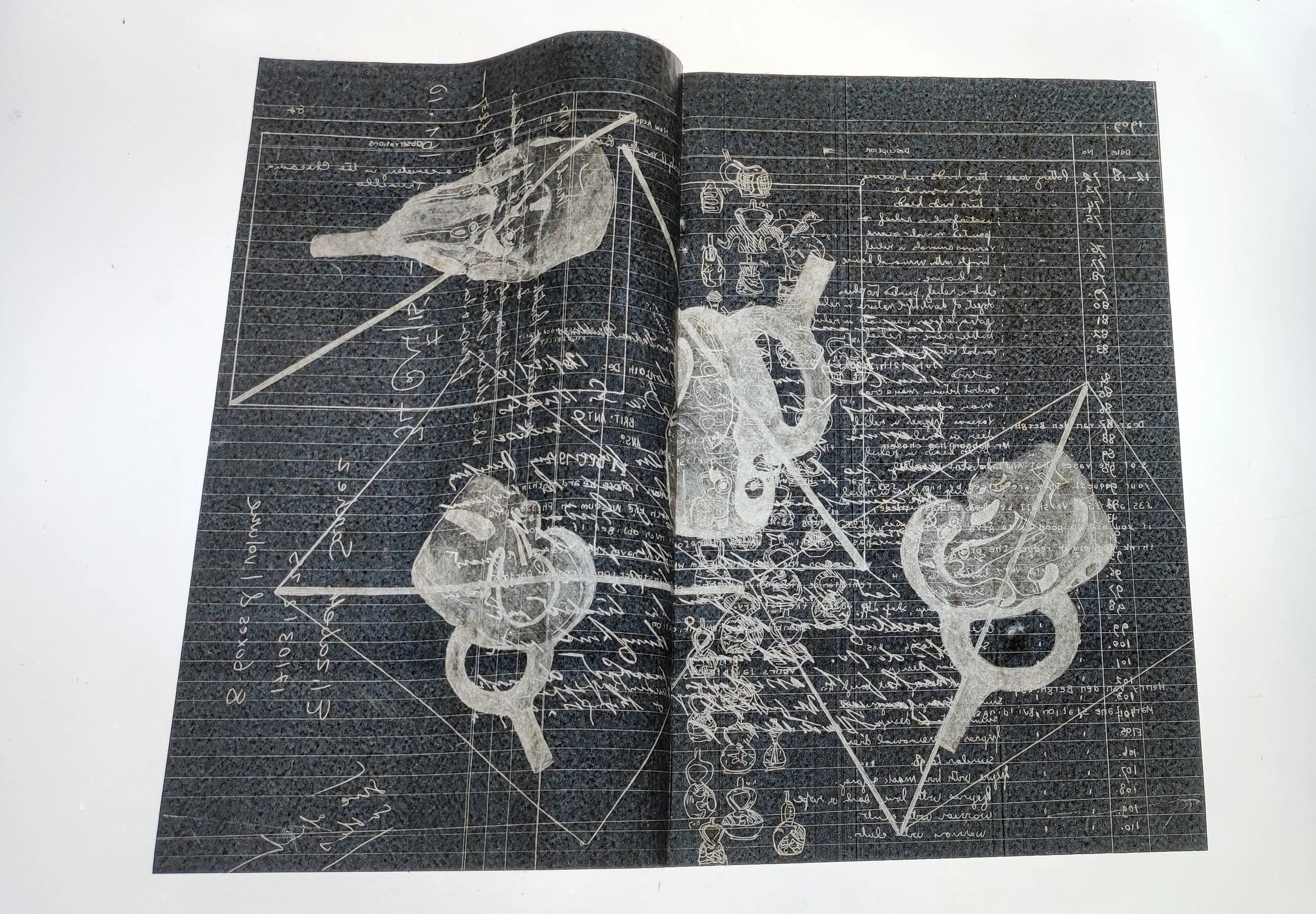
Tracing the Archive, 3/7, 2025. Carbon copy paper , 32 x 41 cm
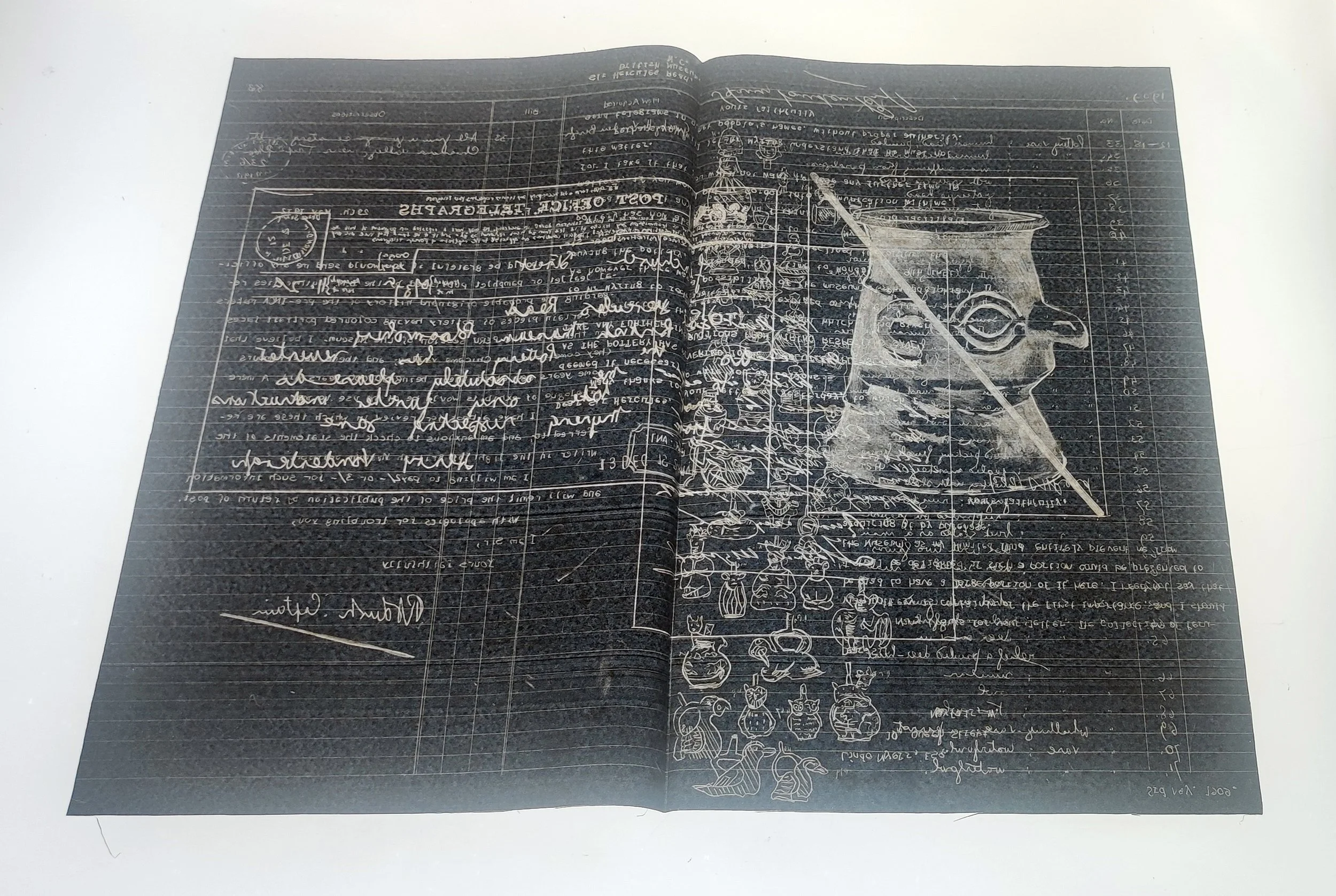
Tracing the Archive, 3/7, 2025. Carbon copy paper , 32 x 41 cm
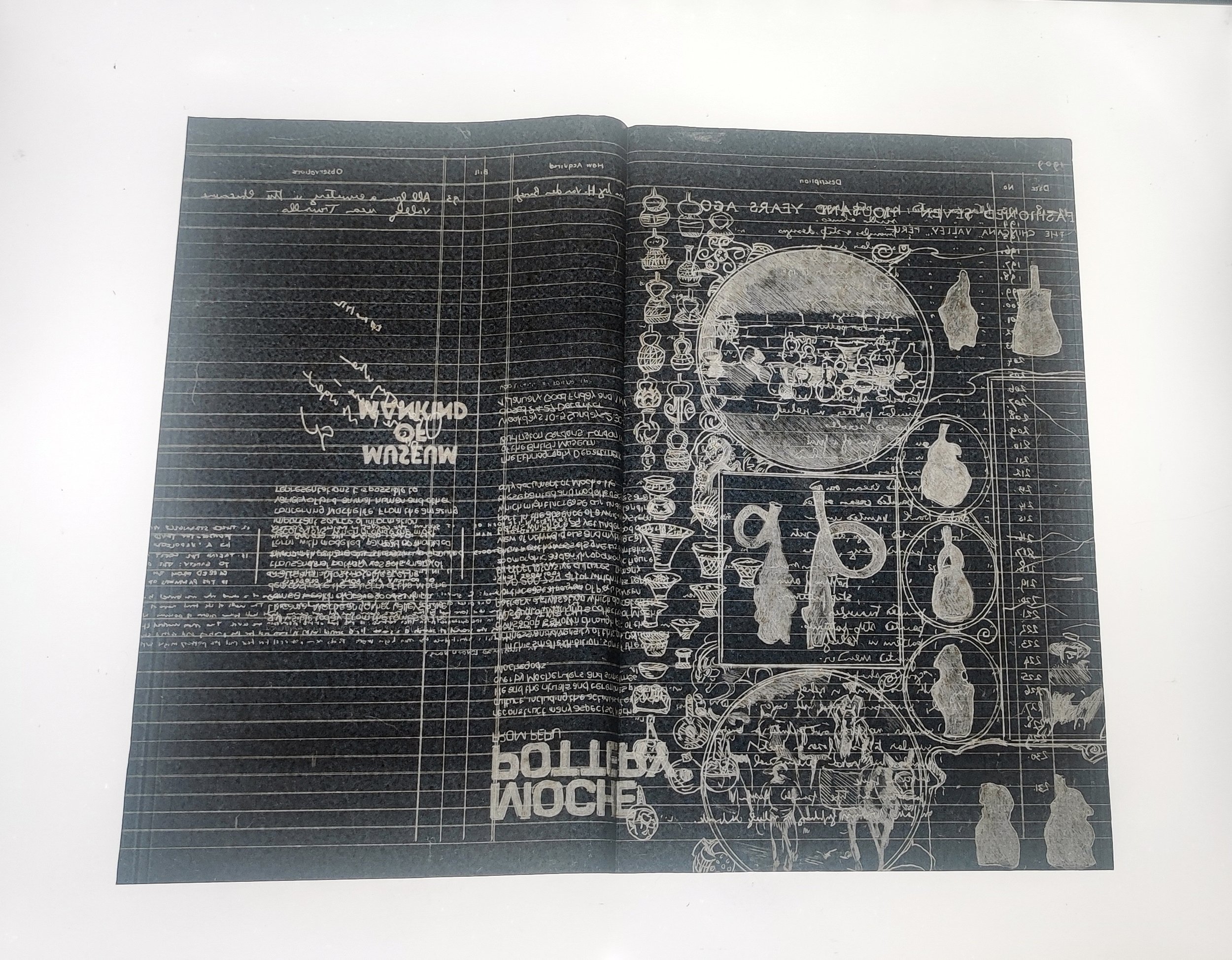
Tracing the Archive, 5/7, 2025. Carbon copy paper , 32 x 41 cm
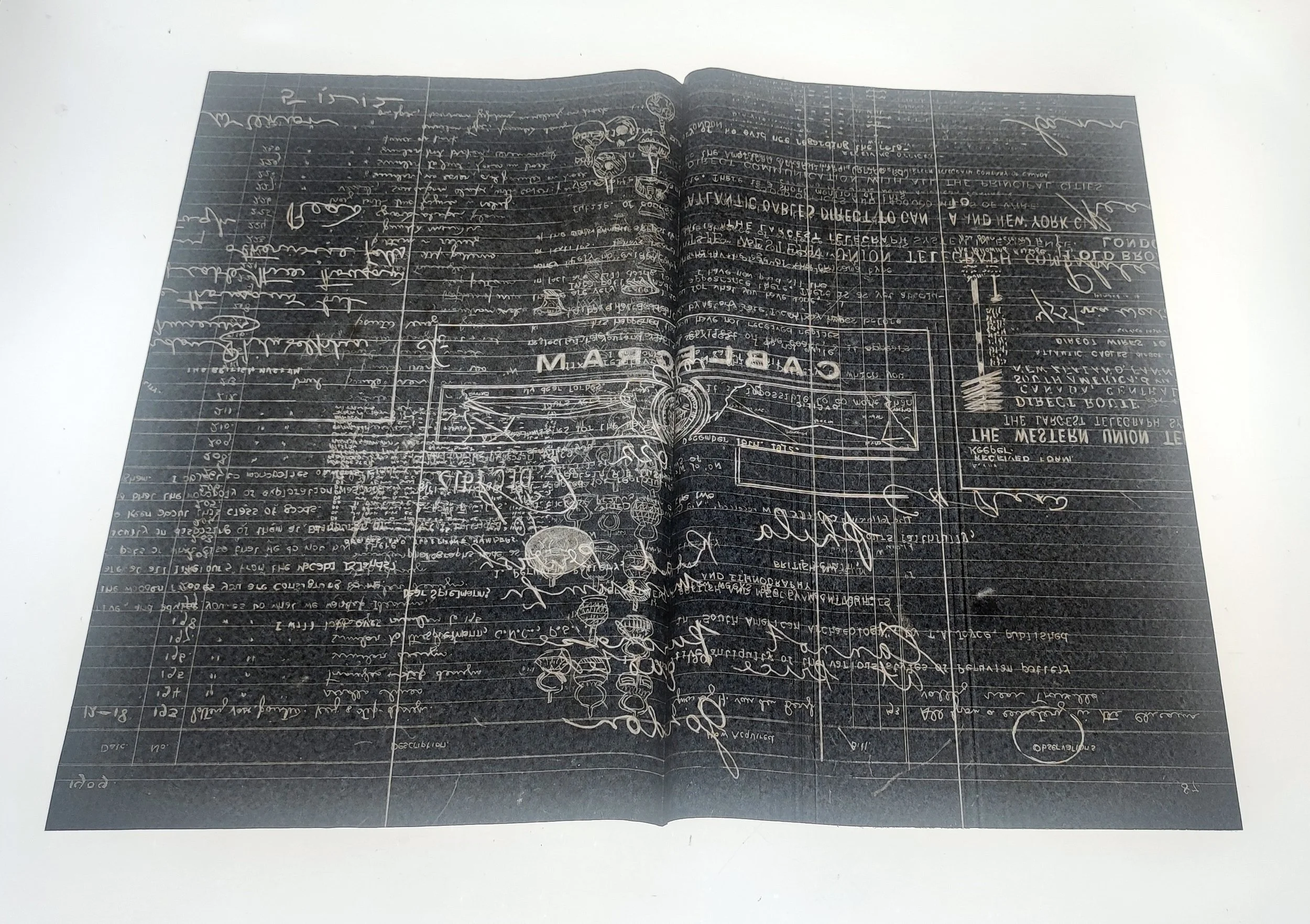
Tracing the Archive, 6/7, 2025. Carbon copy paper , 32 x 41 cm
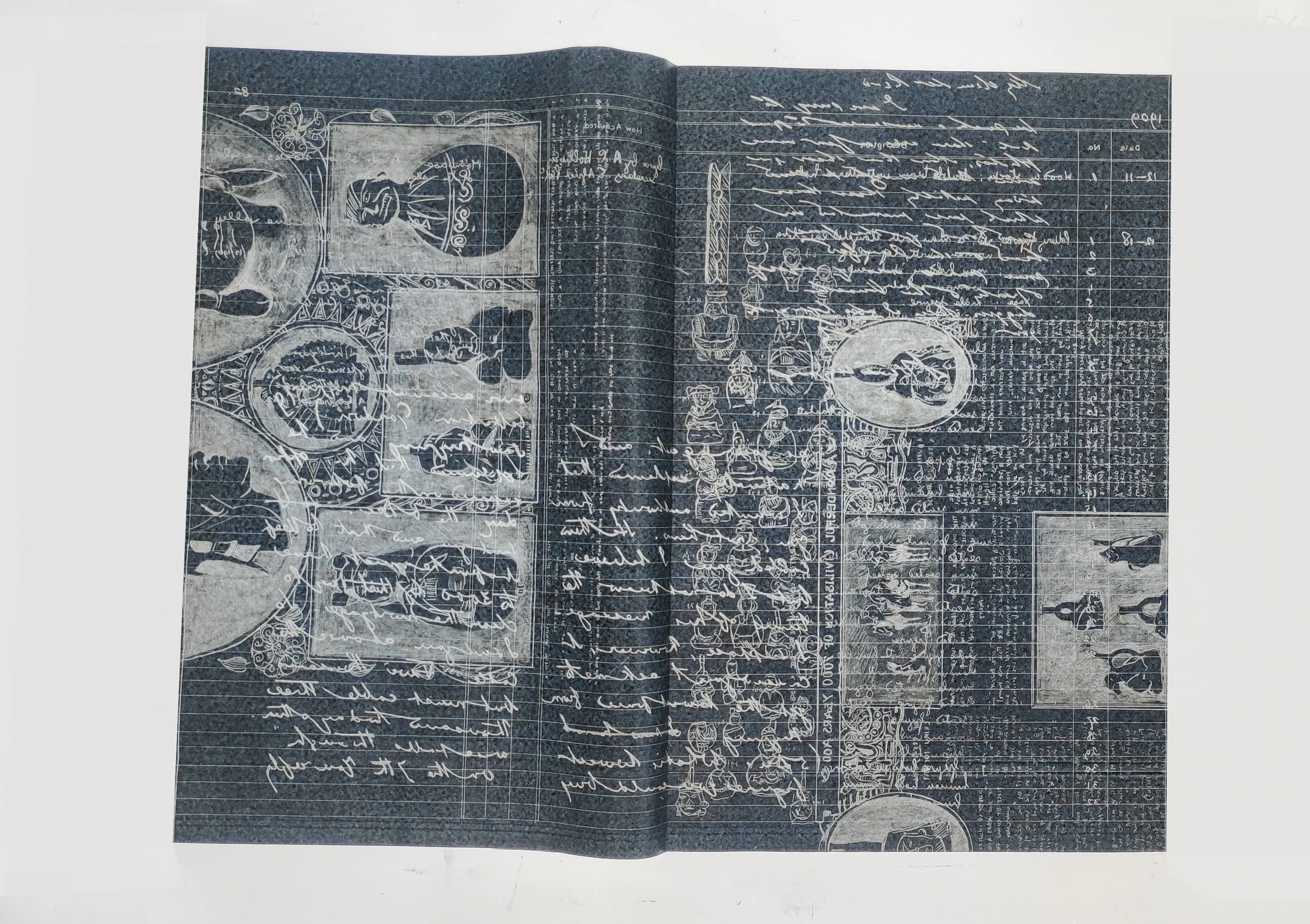
Re-tracing the Archive, 7/7, 2025. Carbon copy paper , 32 x 41 cm
Tracing the Archive, Re-tracing the Story
Contributors: Santiago Valencia Parra, Anna Szulfer, Louise de Mello and James Hamill
In January 2025, supported by the Santo Domingo Centre for Latin American Research (SDCELAR), I began a six-month artistic research project at the British Museum. I aimed to engage with the overlooked layers behind the scenes of the museum’s collection to rethink how memory and histories are constructed within the institution, and to respond to these findings through visual storytelling. With the assistance of Santiago Valencia Parra, Digital Curator at SDCELAR, and James Hamill, Curator of Pictorial and Collection Research Enquiries, I was able to access documents and photographs held at the Anthropology Library and Research Centre, as well as the Museum’s Central Archive.
During my initial visits, I was introduced to Anna Szulfer, a PhD student at the Sainsbury Research Unit for the Arts of Africa, Oceania and the Americas (University of East Anglia) and the British Museum. Her research examines the histories and provenance of Andean collections at the British Museum, with a focus on those formed in the late nineteenth and early twentieth centuries.
Through Hamil and Szulfer, I learned of the existence and location of documents tracing the British Museum’s acquisition records of a pottery collection from the industrialist and major donor Henry Van den Bergh. This collection, along with its related archives, served as the starting point for my project.
The Henry Van den Bergh pottery collection consists of 250 pottery pieces, mostly from the Moche Culture (in present-day Peru). It includes a range of ceramics, such as stirrup-spout bottles, vessels shaped like humans and animals, and containers that depict ceremonial practices. The artefacts were originally obtained by Thomas Hewitt Myring, later purchased by Henry Van den Bergh, and finally acquired by the British Museum in 1909.
A series of letters, telegrams, and receipts preserved in the archive document the transactions and correspondence surrounding the collection’s acquisition. The archive also contains newspaper clippings from the time when Myring brought the pieces to the UK, in which he offers his account of how he obtained them in Peru. Additionally, the archive contains brochures from past exhibitions, as well as black-and-white photographs of the objects.
I approached these paper materials as ethnographic artefacts that reveal the cultural and institutional practices behind the acquisition of the collection. My interest extended beyond the factual content of the documents to the human traces embedded within them: the handwriting, letterheads, stamps, footnotes, and marginalia that reflect the subtleties of institutional and interpersonal decision-making. I was equally drawn to the photographic documentation, examining not only the fronts showing the Moche objects, but also the backs, marked with British Museum copyright stamps and archival annotations.
For this project, I focused on tracing the provenance documentation of the collection at a 1:1 scale, using carbon copy paper as a recording technology. The inked sheets act both as a membrane that filters and as a surface that registers information. As a starting point, I worked from seven pages of the accession ledger Register of Antiquities, Volume 2 (dated 21 May 1907 and 7 April 1913), which log the entry of the Moche pottery pieces into the British Museum. Using the ledger’s format as a template, I created seven drawings, or “archive rewritings”, each measuring 32 × 41 cm.
Over this initial layer, I meticulously traced all the material found in the archive documenting the collection’s acquisition and institutional framing. As I transcribed them, an image emerged on the carbon copy paper through the emptied lines where the ink had been scratched away, producing a mirrored, ghost-like palimpsest. The drawings are intended to be displayed backlit, allowing the voids and impressions to become visible.
This project invites reflection on the construction of memory and the production of knowledge within the museum. Archival systems tend to shape a specific vision of the world through space–time frameworks that reflect and reinforce the perspectives they uphold. The British Museum’s record-keeping follows the functional logic of the institution. By contrast, in my carbon copy paper drawings, the archive is transformed into a crafted artefact where the imagery of Moche pottery intersects with, disrupts, and merges into the many layers of documentation and registration. From this interplay, a hybrid memory emerges—one shaped by collisions, absences, and fractures.
The written records I examined primarily serve to document the process of acquisition, offering little insight into the creation of the artefacts themselves. Any information predating their institutional entry is found instead in the craftsmanship, finish, and visual language of the objects— traces of meaning embedded in their making, before they were owned, categorised, or displayed.
My artistic research method is therefore different from that of an academic researcher. Rather than seeking answers, I intended to pose new questions through material inquiry. By retracing the Van den Bergh collection’s provenance trail, I asked: What forms of power and visibility are encoded into the archive? While these inquiries draw on academic work, such as that of PhD researcher Anna Szulfer, the outcome of my artistic approach did not yield a definitive conclusion based on the findings; instead, it invited new readings and narratives, favouring layered and fragmented histories.